
Benefit to your business
Server consolidation helps businesses reduce unnecessary hardware, simplify IT management, and use computing resources more efficiently.
Over time, organizations often add separate servers for new applications, departments, locations, or acquired businesses. This can result in server sprawl—an environment containing more physical servers than the organization needs.
Excess servers can increase:
Hardware replacement costs
Electricity and cooling requirements
Software and licensing expenses
Backup and disaster-recovery complexity
Cybersecurity and patch-management responsibilities
The time required to monitor and maintain the network
A properly planned server consolidation project can reduce this complexity while improving the reliability, scalability, and manageability of your IT infrastructure.
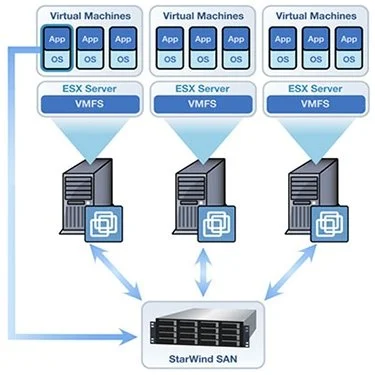
Run a More Efficient Network
Many physical servers use only a portion of their available processing power, memory, and storage. Consolidation allows compatible workloads to share appropriately sized infrastructure instead of requiring a separate physical server for every application.
Reducing the number of physical systems may help your business:
Improve hardware utilization
Reduce power and cooling costs
Simplify server monitoring and maintenance
Standardize backup and recovery procedures
Reduce the number of systems requiring updates and security patches
Make future expansion easier to plan and manage
Consolidation must be carefully designed to avoid creating performance problems or a single point of failure. Workload requirements, redundancy, storage, licensing, backups, cybersecurity, and disaster recovery should all be evaluated before servers are combined.
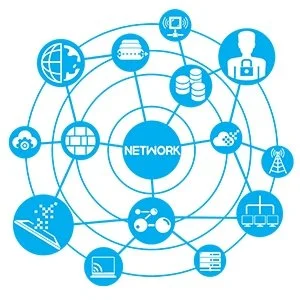
Server Consolidation Planning
Server consolidation is not simply moving several applications onto one machine. It requires a careful review of your current environment and future business needs.
Data Tech Security can evaluate your:
Existing physical and virtual servers
Business applications and dependencies
Processing, memory, and storage requirements
Backup and disaster-recovery systems
Security and compliance requirements
Hardware age and support status
Licensing considerations
Expected business growth
Based on this assessment, we can recommend whether your organization should retain, replace, virtualize, consolidate, or migrate individual server workloads.
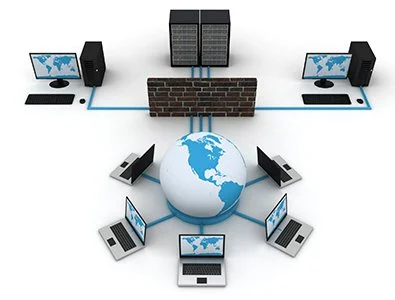
Hyper-convergence
Hyperconverged infrastructure, commonly called HCI, combines computing, storage, virtualization, and centralized management within a software-defined platform.
Traditional data centers may use separate servers, storage arrays, and storage networking equipment. HCI brings these resources together into a unified system that can be managed through a central interface.
Potential benefits of HCI include:
Simplified infrastructure management
Easier expansion as computing needs grow
Reduced dependence on separate storage systems
Improved resource utilization
Centralized monitoring and administration
Greater flexibility for virtualized workloads
Reduced data-center complexity
HCI can be valuable for organizations that need scalable, resilient infrastructure, but it is not automatically the best or most economical choice for every business. Hardware requirements, licensing, vendor support, workload demands, and long-term costs must be carefully considered.
Server Virtualization
Server virtualization allows multiple isolated virtual machines to operate on one physical server. Each virtual machine can run its own operating system and applications while sharing the host server’s processing, memory, storage, and networking resources.
When properly implemented, virtualization can:
Reduce the number of physical servers
Improve resource utilization
Simplify deployment and maintenance
Support faster backup and recovery
Make workloads easier to move or restore
Improve scalability and business continuity
Virtualization is not appropriate for every workload. Data Tech Security evaluates application compatibility, performance requirements, licensing, security, and redundancy before recommending a virtual server environment.
Server Consolidation Solutions from Data Tech Security
Data Tech Security can assess your current server environment and recommend a consolidation strategy based on your applications, security requirements, budget, and future growth.
Our goal is to simplify your IT infrastructure without sacrificing performance, security, reliability, or business continuity.
Contact Data Tech Security to learn whether server consolidation, virtualization, cloud migration, or hyperconverged infrastructure can improve the efficiency of your business technology.